If you have been trying to find QEEG brain mapping in NYC, there is probably one term that you have found confusing: QEEG brain map. QEEG, which stands for quantitative electroencephalogram, is essentially a test used to measure electrical activity in the brain. The result can give a physician more information about various brainwave patterns.
The doctors from NY Psychology & Neurofeedback use QEEG brain mapping as an important part of their neurofeedback therapy. They do not believe that one protocol works for all patients. With the data received from the brain map, they can create a customized treatment plan for each patient individually.
So What Is a QEEG Brain Map?
To start with a QEEG brain map, an EEG is taken first. For that purpose, special sensors are attached to the patient’s head to monitor brain activity.
The information gathered is then analyzed using quantitative methods. Instead of showing only one moment of brain activity, QEEG makes it possible to analyze patterns across various brain areas.
It is like creating a personal activity map of the brain. This map will not diagnose your condition on its own, but it can provide additional information to be interpreted by a professional together with your symptoms, background, and objectives.
NY Psychology & Neurofeedback explains that its brain map is an evaluation of active and resting states of the brain that can be used when developing a psychological and neurological treatment plan.
Why Is QEEG Conducted Before Neurofeedback NYC Therapy?
The most common question that arises when someone starts considering neurofeedback NYC therapy is, “How do I know what type of neurofeedback I need?”
This is when assessment is crucial. Neurofeedback is not necessarily a universal process. People may seek help for concerns such as difficulty concentrating, anxiety, sleep issues, and emotional troubles. At the same time, brain activity patterns can also be quite different from person to person.
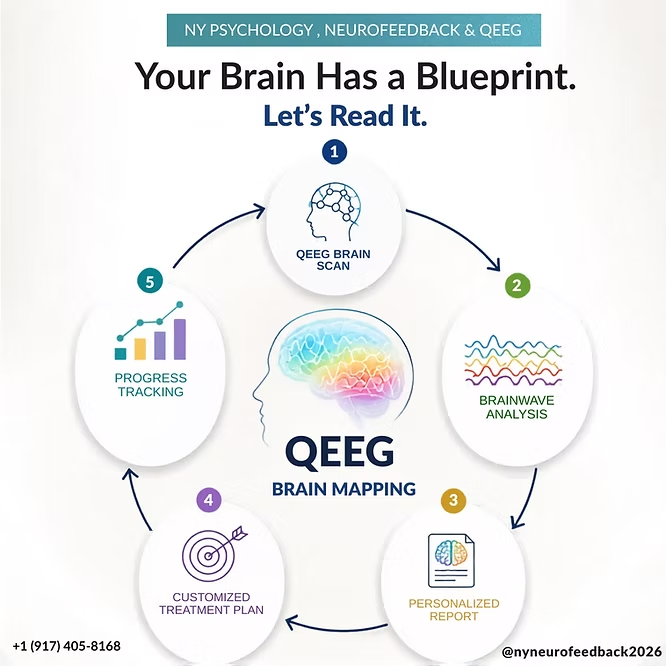
A QEEG can provide additional information to help a professional choose an appropriate protocol. According to NY Psychology & Neurofeedback, the procedure is conducted in three general stages: assess, plan, and treat. A QEEG brain map is part of the assessment process, and the information obtained can help in developing a personalized neurofeedback protocol.
What Occurs During QEEG Brain Mapping?
If you have never had a QEEG, the process might seem more confusing than it really is.
Electrodes used during an EEG measure brainwaves. They do not “read your thoughts,” and the test is not aimed at collecting any other kind of data.
NY Psychology & Neurofeedback lists a 90-minute QEEG diagnostic brain mapping and analysis consultation, followed by a second appointment in two weeks for QEEG result review.
Following your provider’s preparatory advice before the procedure is important. NY Psychology & Neurofeedback advises completing the necessary forms and resting well before coming in for your appointment.
What Will a QEEG Brain Map Tell You?
Information about patterns of brain activity at various frequencies and areas may be collected through a QEEG. The usefulness of this information depends on it being interpreted properly by a professional.
For instance, a person may be struggling with concentration problems, insomnia, or mental fatigue. But there is no way to determine which patterns might be important to look for based only on those experiences.
It is essential to understand that QEEG testing cannot be viewed as an independent diagnostic procedure. Brain mapping is one element within the entire picture.
QEEG Brain Mapping and Customized Neurofeedback
The term customized is very important when discussing neurofeedback treatment.
At NY Psychology & Neurofeedback, the data collected through QEEG is used to create a protocol based on the client’s individual brain activity and treatment goals. During neurofeedback sessions, the patient wears a special cap that measures brainwave activity while computer-based software provides immediate feedback. Progress is monitored throughout the process.
This approach makes the treatment process more personalized. Instead of asking, “What treatment do you give to everyone?” the question can be, “What does your individual assessment show, and what are your goals?”
Who May Need QEEG Brain Mapping?
Individuals looking for QEEG brain mapping near me may have various reasons for choosing this type of assessment.
NY Psychology & Neurofeedback treats children, adults, and older adults and offers help with concerns such as ADHD, anxiety and panic disorders, depression, insomnia and sleep disorders, migraines, learning problems, OCD, and TBI.
This does not mean that QEEG or neurofeedback should be used with everyone experiencing these concerns. Rather, an evaluation by a professional is required to determine whether this type of assessment or treatment is suitable in a particular case.
What Are the Benefits of Choosing a QEEG Provider in NYC?
The choice of a provider cannot be reduced to searching for “QEEG brain mapping NYC.”
It is important to ensure that the provider has the necessary professional qualifications and experience interpreting QEEG results and using neurofeedback. You will also want to understand how the provider will use the results of the assessment.
Dr. Merlyn Hurd, PhD | QEEG-D, is a licensed psychologist with more than 40 years of clinical experience. Her professional specialization includes psychology, biofeedback, neurotherapy, and QEEG-D analysis. The practice is situated in the NYC Flatiron District.
Frequently Asked Questions About QEEG Brain Mapping
Is a QEEG brain map the same as an MRI?
No. While an MRI provides detailed visualization of the physical structure of the brain, QEEG records and analyzes its electrical activity.
Does a QEEG brain map diagnose a mental health disorder?
QEEG brain maps are not used alone to diagnose a psychological or psychiatric condition. The data collected from a QEEG test needs to be properly interpreted by a professional in conjunction with symptoms and medical history.
Is QEEG brain mapping done together with neurofeedback?
QEEG brain mapping may be used together with neurofeedback because it can provide information that helps customize a treatment protocol.
How long does a QEEG appointment take?
According to NY Psychology & Neurofeedback, QEEG brain map appointments currently last approximately 90 minutes, followed by a separate QEEG brain map review.
How do I find QEEG brain mapping near me?
When searching for QEEG brain mapping near you, look for someone with adequate QEEG training and the qualifications to interpret brain maps.
Conclusion
When undergoing neurofeedback, QEEG brain mapping can make the process more informed by providing additional data about brain activity for a clinician developing a personalized program.
For anyone trying to learn more about neurofeedback therapy or QEEG brain mapping, it is vital to understand the assessment process involved.
At NY Psychology & Neurofeedback, Dr. Merlyn Hurd uses QEEG assessment along with other factors when offering personalized neurofeedback programs.
The right way to start your journey with either QEEG or neurofeedback therapy is to consult a professional who can explain what this assessment will and will not tell you about your condition.
Read our next blog — Difference Between Biofeedback and Neurofeedback